
Indigenous Cultures and Cosmological Encounters: Sofia Alaoui’s ANIMALIA
In Staying with the Trouble, Donna Haraway describes Science Fiction as “a mode of attention, a theory of history, and a practice of worlding”. In Animalia, Sofia Alaoui uses science fiction as an allegorical tool, imagining a world in which the social strata is upended – a state of emergency caused by an inexplicable meteorological phenomena.
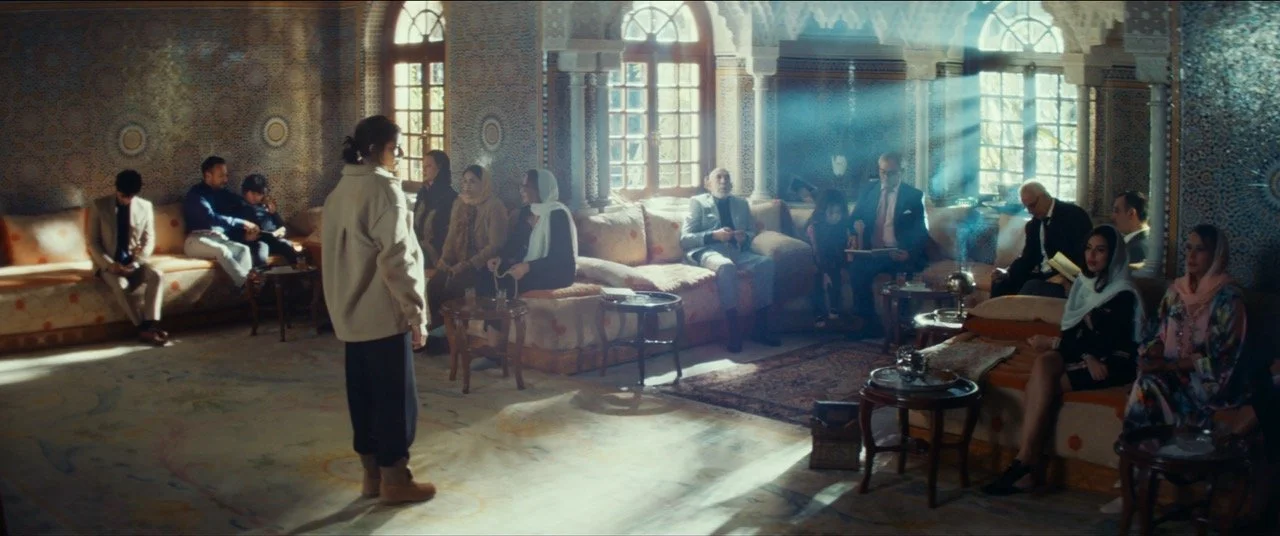
In Alaoui’s film, as in Morocco itself, the gulf between the moneyed families of society and the poor is clear to see. Our protagonist, Itto, lives with her husband, Amine, and his family in a rural compound, replete with luxurious interiors and a team of staff to keep everything running smoothly. Inside the family home, we hear bird song, water flowing, a lush green garden. It is clear that this is the home of a rich family, and in the opening shots, Alaoui pans through grand but empty rooms, before ending in a kitchen, where the domestic workers of the house are preparing food. It is in this context, amongst the staff, that we are first introduced to the film’s protagonist, Itto, a pregnant woman, as she laughs and jokes with the staff.
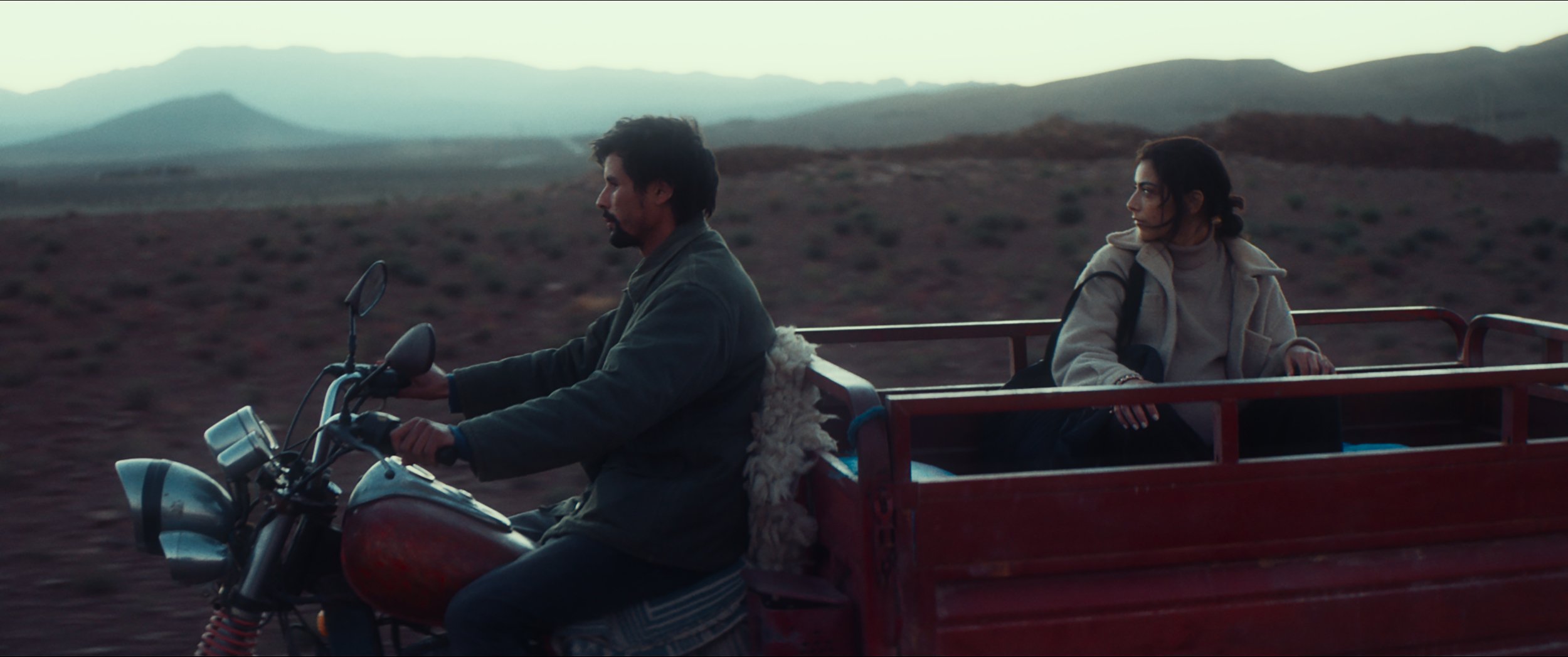
It is here that language becomes apparent, and as the film continues, a lot can be understood from the language each character in the film speaks in. Arabic is the language of faith, of prayer and the Moroccan dialect Darija is spoken largely in informal contexts. It is the understood language of the home. Amine, however, speaks often in French, a colonial hangover and still often the preferred language of Morocco’s upper classes. As Itto ventures out of the compound and into the countryside, she meets local people, who like her, speak Amazigh. This language becomes representative of a life outside of the expected order.
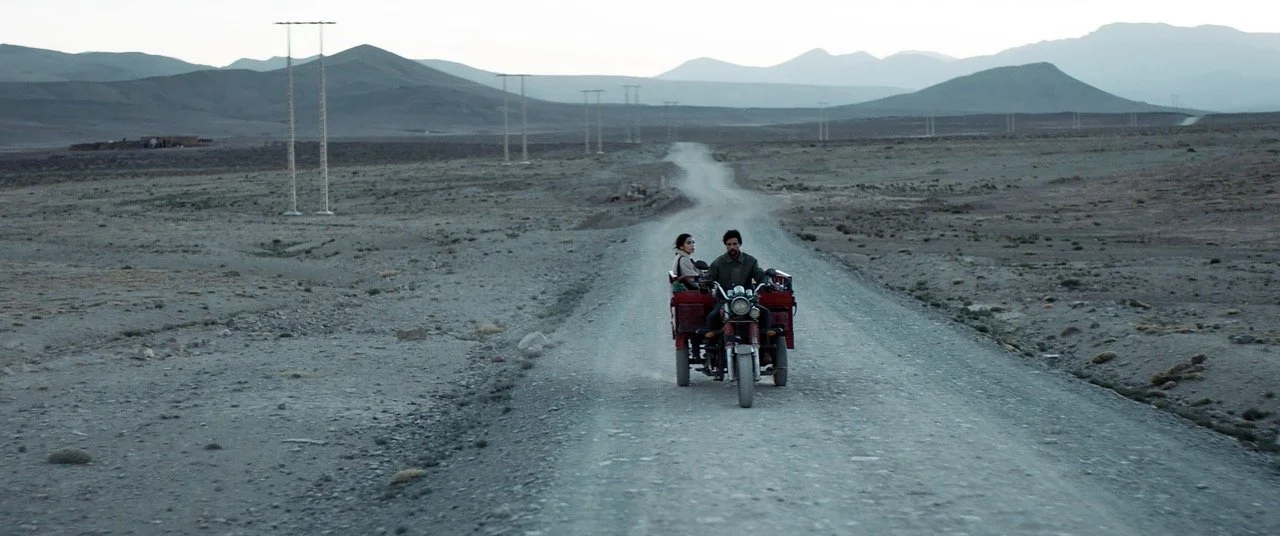
In invoking indigenous languages, Alaoui brings into the fold alternative belief systems. As with many indigenous cultures, Amazigh stories are passed down in oral tradition and within this mythology, there is a belief in spirits and the power of nature, such as the life-giving force of rain and the sea. To an outside eye, the depictions of Morocco’s landscape might seem otherworldly – arid horizons reminiscent of faraway planets. But there are cultures to whom this land has been home for generations, attuned to the subtleties of the shifting seasons, of life outside of manicured gardens and grand homes. Much can be inferred from the geographical specificity of the film’s locations but most interesting miight be the town of Khourigba as a site of pilgrimage. Khourigba is a town most known for its phosphate reserves and surrounding industry, the resulting product used to support Morocco’s agriculture. Could Alaoui be insinuating the problematics of this – of an economic reliance on the extraction of a substance that endangers not only the environment but the traditional ways of tending to land that become erased by its use?
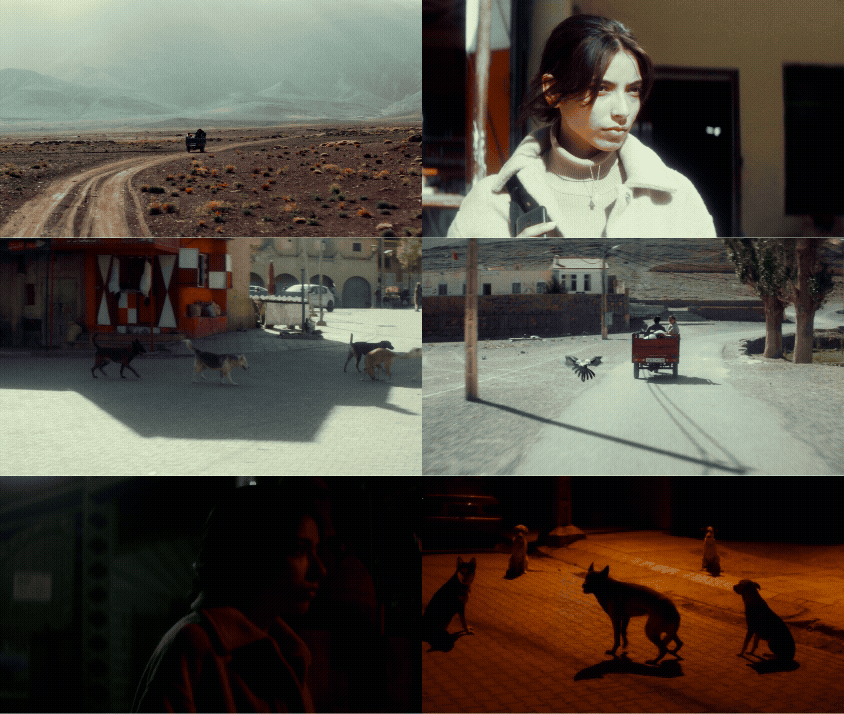
Central to this film is the relationship between humans and nature and this can also be understood in thinking about non-human relationships and ways that kin can be made outwith a purely reproductive context. As Itto, our pregnant heroine journeys to be reunited with her husband and his family in Khourigba, animals approach her in ways that have previously been unfamiliar. Most relatable to viewers might be a scene whereby a dog flanks Itto and led by the howling wind takes her for a walk. It is here they encounter a man who claims that all the dogs have been possessed by the devil. It seems there has been a shift in the hierarchy whereby mankind rules over nature and the dog bites the man on the leg. The street dog has become Itto’s protector. Later, as Itto nears Khourigba, a magpie rests gently on her pregnant belly and seems to provide a reassuring presence amongst the chaos.
And yet, Animalia is a film that defies easy interpretation. Viewers looking for the otherworldly creatures and distant planets found in traditional science fiction may be left wanting. Instead, the signs of a shifting world are shown more subtly, atmospherically imbuing the film with a sense of magic and of mysticism. After a cosmological encounter that makes Itto question her own reality, the teenager she has been travelling with encourages Itto to look beyond the physical world for an explanation. This thinking is one that could be interpreted within a belief system of religion, yet Alaoui seems to be willing us to look beyond faith and logic for interpretation of the unexplainable. We might be reminded that there are different resonances to attune our minds to if we only take the time to do it.
By Myriam Mouflih
ANIMALIA directed by Sofia Alaoui is in UK cinemas from Friday 12 December. This text was commissioned by T A P E.
